


Hose Selection
When choosing a hose for an assembly, there are a few factors to keep in mind.
Hoses are composed of four main components: The core tube material and its construction, reinforcement layers, covers, and end connections.
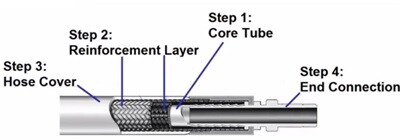
A system's characteristics can affect how well each of the four components will perform. That is why it is vital to keep the following requirements in mind when picking each of these components.
Pressure: All hoses are not the same, especially when it comes to how much pressure (or vacuum) they can withstand. It is important to know the maximum and minimum pressures both inside and outside of the hose assembly.
Temperature: Certain hose materials handle extremes of heat or cold better than others. Identify the temperatures the hose assembly will be exposed to – both high and low.
Application: Once in place, will the hose remain stationary and not be exposed to movement or vibration, or will the system have a dynamic element that will involve flexing or other position shifts during its operational life?
Cleanliness: Does the assembly require that hose be easily cleaned, either inside, outside or both? Some internal and external surfaces lend themselves more to this ability than others.
Compatibility: The media that will be running through the assembly needs to be matched up with a hose material that will not be reactive.
External Environment: Not all hose covers can handle exposure to temperature extremes, humidity, rubbing against other parts, electricity, or direct sunshine over an extended period of time.
Knowing these attributes of your system will make selecting the right hose much easier and protect your investment.
Safe Product Selection
The complete catalog contents must be reviewed to ensure that the system designer and user make a safe product selection. When selecting products, the total system design must be considered to ensure safe, trouble-free performance. Function, material compatibility, adequate ratings, proper installation, operation, and maintenance are the responsibilities of the system designer and user.